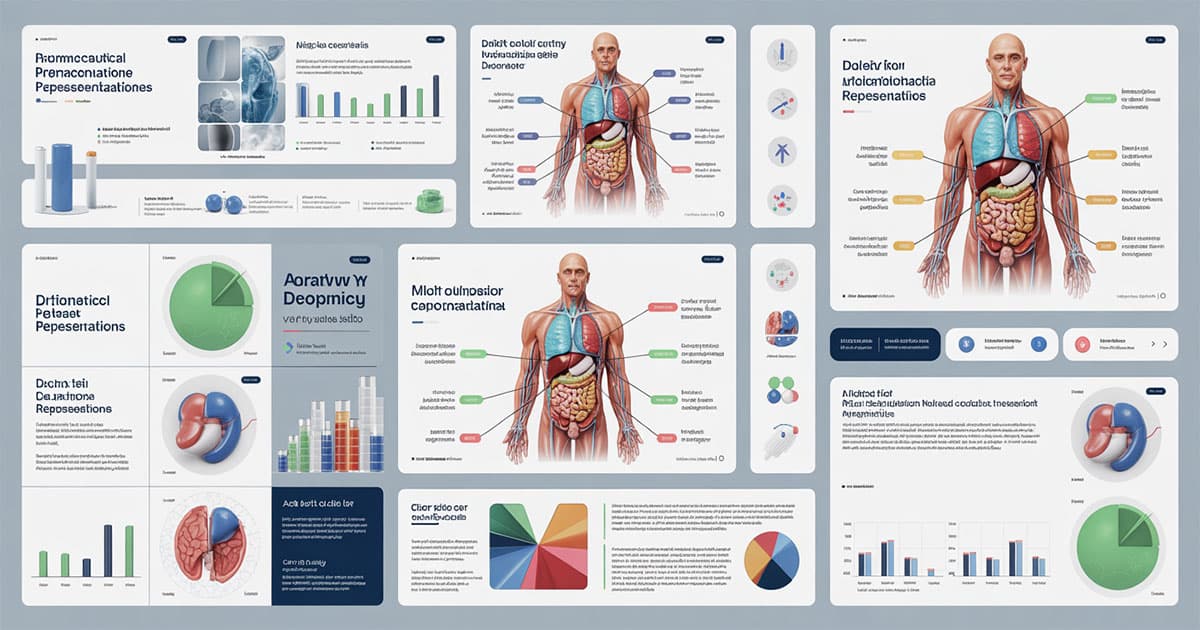
Why Visual Aid Design Matters
The visual aid is the most important tool in a medical representative arsenal. In a typical 5-7 minute doctor interaction, the visual aid guides the conversation, presents clinical data, and communicates key selling points. A well-designed visual aid can make the difference between a forgettable visit and one that drives prescriptions.
Best Practice 1: Start with Strategy
Before designing, define your objectives clearly:
- What is the key message you want doctors to remember?
- What clinical data supports your claims?
- Who is your target audience (GPs, specialists, KOLs)?
- What competitive advantages do you have?
Best Practice 2: Clear Visual Hierarchy
Doctors are busy. Your visual aid should communicate key messages at a glance. Use clear hierarchy with:
- Large, bold headlines for key messages
- Supporting data in clear charts and graphs
- Product images prominently placed
- Minimal text — let visuals do the talking
Best Practice 3: Effective MOA Illustrations
Mechanism of Action illustrations are often the most impactful pages. Use clear, anatomically accurate illustrations that show how your drug works at the molecular or cellular level. Animation videos for e-detailing can further enhance MOA communication.
Best Practice 4: Data Visualization
Clinical data should be presented through clear charts, graphs, and infographics rather than dense tables. Use color coding, highlighting, and annotations to draw attention to key data points that support your claims.
Best Practice 5: Compliance First
Ensure all claims are properly referenced, safety information is included, and the material complies with UCPMP guidelines (India) or relevant GCC regulations. Fair balance between efficacy and safety is essential.
Best Practice 6: Multi-Language Versions
For companies operating across India and the Middle East, having visual aids in multiple languages is essential. Arabic versions require special attention to RTL layout and cultural sensitivity.
Best Practice 7: Print and Digital
Modern visual aids should work in both print and digital formats. Design for print quality (CMYK, high resolution) while also creating digital versions for e-detailing platforms and tablet presentations.
Work with Pharma Design Experts
At Nanobird Technologies, our pharma marketing team has been creating visual aids since 2012. We understand medical terminology, MOA illustrations, clinical data presentation, and regulatory compliance. We create visual aids in English, Arabic, French, Portuguese, and Malayalam. Contact us for your next pharma project.